
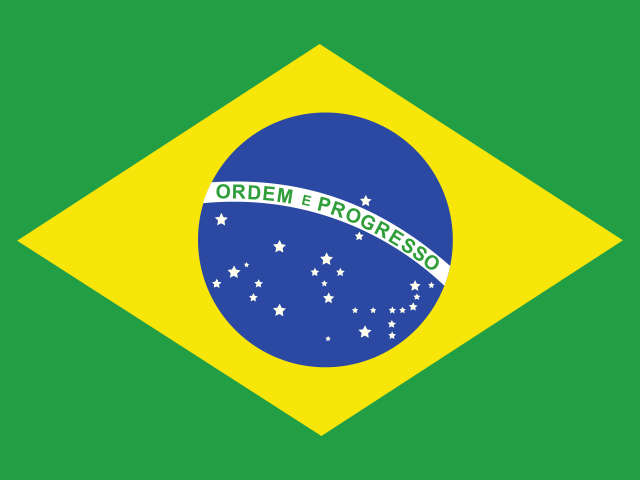

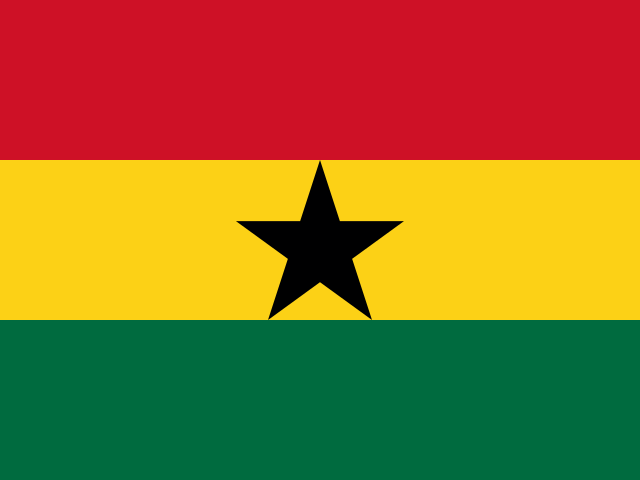
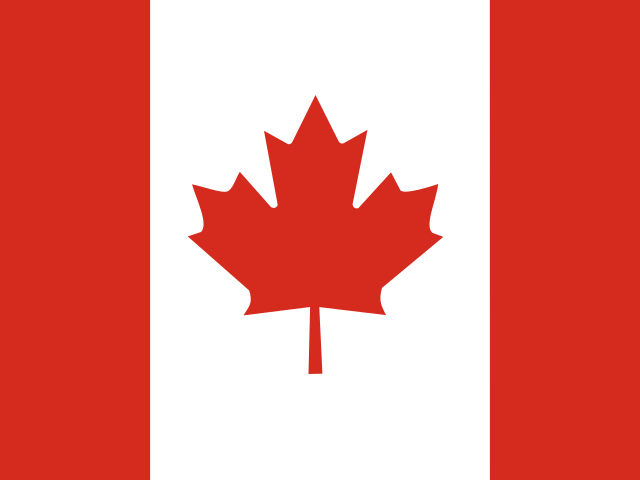

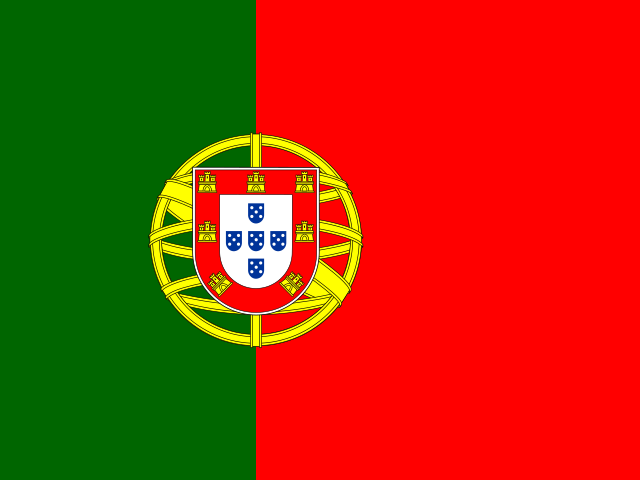
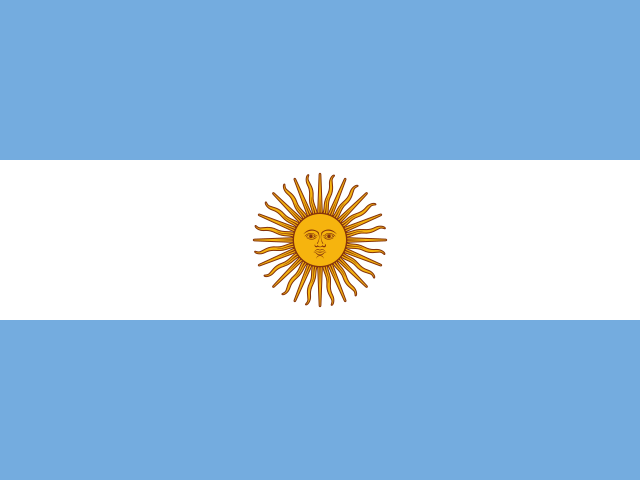


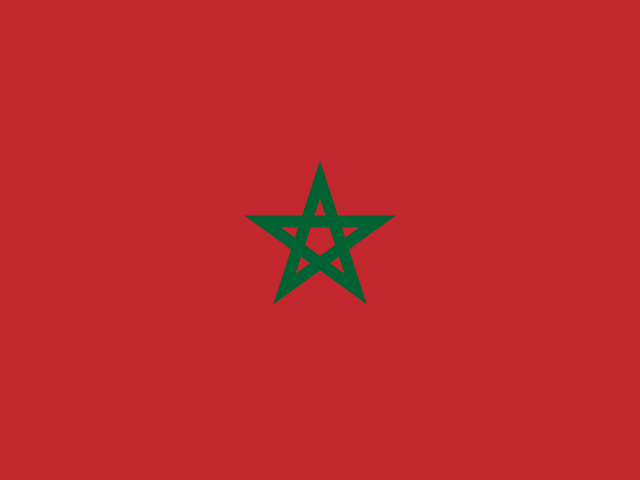


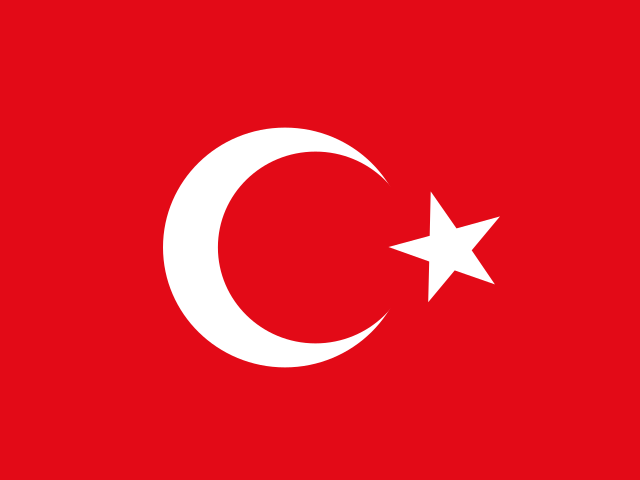

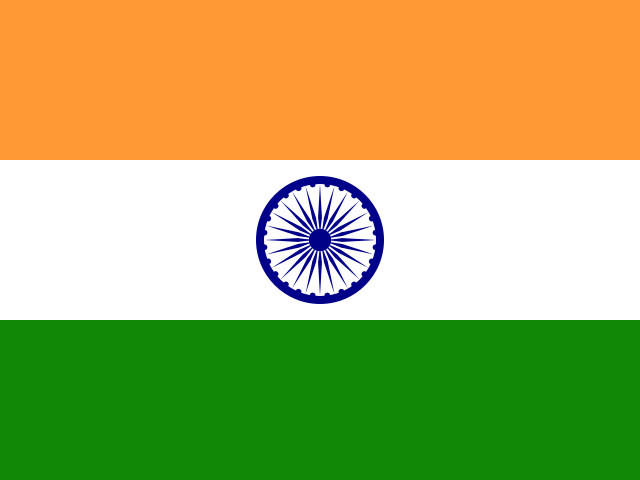














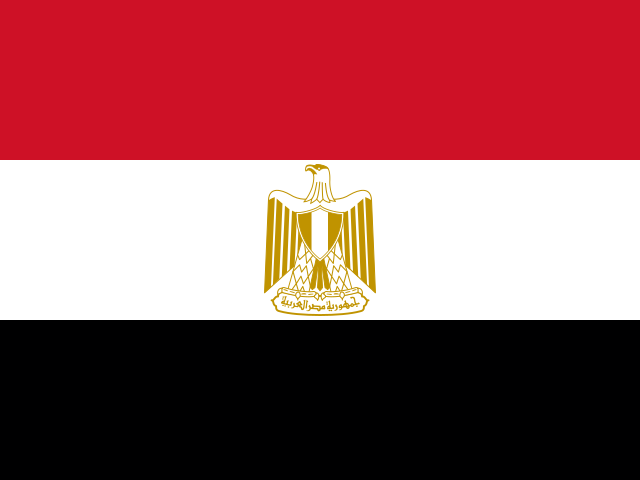
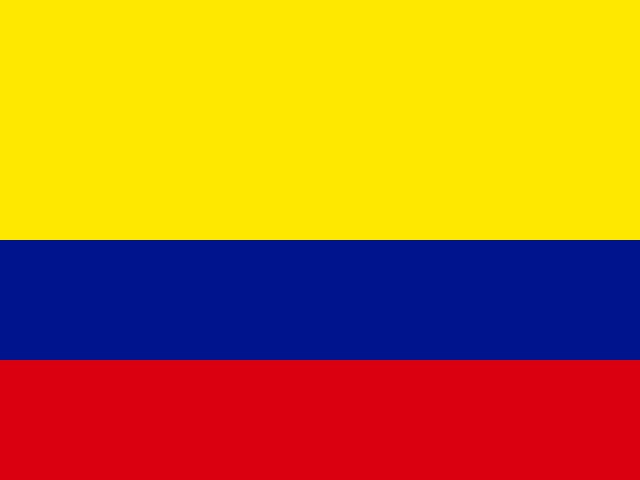
Names
The map shades one country. Which is it?
bigworldquiz.com
A free geography quiz that teaches before it grades: 200 countries, every capital and flag, all 50 US states, on real maps of every continent.
Chapter I · Atlas
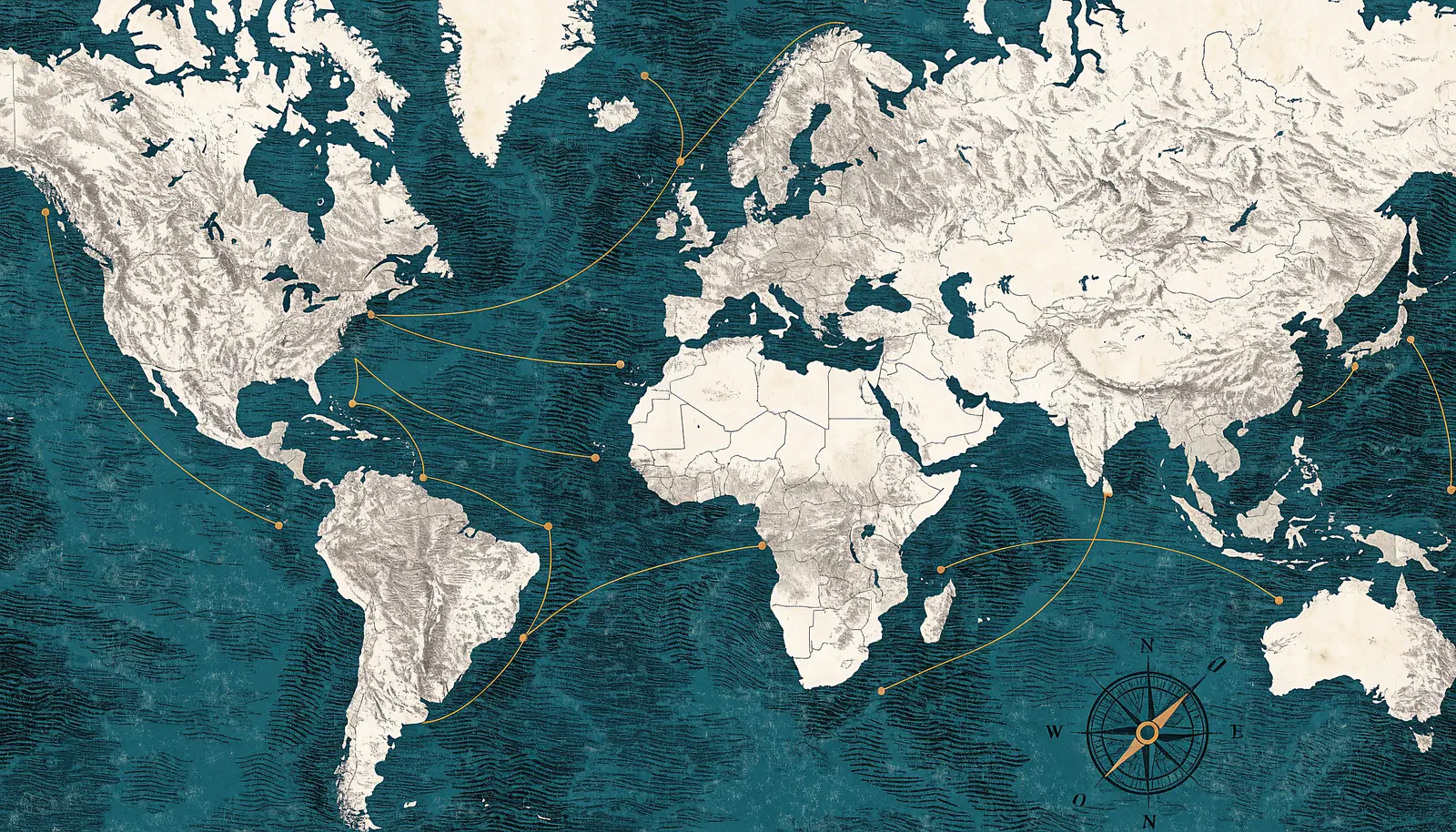
Six continent maps, pannable and zoomable, stitched into one world view. Pin any country and a fact sheet unfolds: capital, flag, population and GDP with their world ranks, and the languages spoken there.
Flip the country list into a wall of flags. Shade the whole map by population or GDP. Tap Portuguese on Brazil's sheet and every country where it is official lights up.
Chapter II · Practice
Practice quizzes you from a rotation: a small pool of countries that cycles as you answer. The pool adapts to you; miss a place and it comes back sooner, name one reliably and it drifts out while a new country takes its seat. Peek when you are stuck; a peeked country stays in the pool until you can name it unaided.
The pool starts small on purpose. Once those first ten countries come easily, widen it: a region, a continent, eventually the whole world. Spelling slips are caught and retried free, so a typo never counts against you.
Switch on Forgiving spelling and a name spelled the way it sounds is simply right: Kirgizstan, Filipines, Wagadugu. It works from how the names are pronounced rather than how close the letters look, and it refuses anything that could just as easily be somewhere else, so you are tested on the geography and not the orthography.
You can answer out loud, too: tap the microphone in the answer box and say it. Your words appear as you speak, ready to be read back before they count, and one swipe sends the answer or wipes it and listens again. Works in every typed mode here, in the Quiz and in Versus.
Chapter III · Versus
Add the people you play with, then open a lobby and send them the code, or list the room publicly and take on whoever is around. Everyone answers the same questions at the same time, on any region and any question style you pick.
Two formats: all play, where the same question lands for everyone and every right answer scores, and a race, where the first right answer takes the point and the room moves straight on. Chat while the room fills, watch the scoreboard move question by question, and settle it again: the lobby keeps count of who has won what, and the winner of the last game gets the trophy to spend on the room.

Chapter IV · Quiz
A quiz is one graded pass over the region you choose: every place asked exactly once, timed, scored at the end, with a per-country report of what you missed.
Finish and the run lands in your history with a score to beat, ready to submit to the boards.
Chapter V · Leaderboards
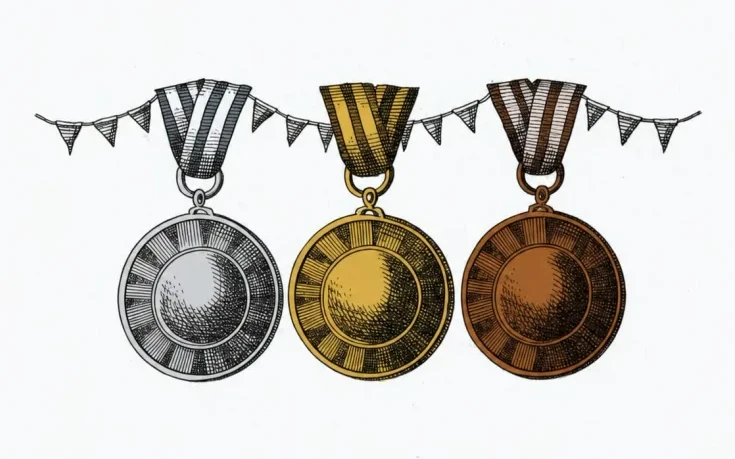
Every region and mode keeps its own board: best complete run per player, ties broken by spelling and then by the clock, medals on the first three rows, a chip for a perfect score.
Finish a quiz and sign your run: guests can sign with any name, while signed-in players claim a screen name of their own, and their runs carry a verified badge on the boards.
Seasonal events · Now on: World Cup 26
From time to time the site hosts a seasonal event: a limited-time scope with its own maps, quizzes and leaderboards. The current one is World Cup 26, with a group-by-group wall chart on the Atlas tab, dedicated boards, and a quiz report that converts your score into a tournament finish, from group-stage exit to world champions.
Enter the World Cup zone
Five ways to be asked
Names
The map shades one country. Which is it?
Capitals
The country is given. Type its capital.
Both
Name the place, then its capital, back to back.
Flags
A flag fills the card. Whose is it?
Locate
The name is given. Click it on the map.
Every continent, every country, every capital, every flag, plus all 50 US states. Explore the maps, learn names, capitals and flags with adaptive practice, then put your knowledge to the test.
Everything that shapes a Practice round lives here: how many places are in play, the two automatic mastery rules, and the pool of places you can be asked about. Open this screen any time with the Options button on the Practice tab.
Every place carries a per-session weight that starts at ×1: a right answer cuts it by a quarter (×0.75), a wrong answer or a peek doubles it. Questions are drawn in proportion to these weights, so the places you struggle with come up more often.
What it does: sets how many places from the current scope are in the rotation; everything else sits on the bench.
Why it's useful: a small active set (around 10) repeats each place often enough to stick. Master those, then grow the set or let the rules below rotate in fresh material. Shrinking benches your most-answered places first (all-time); growing brings back your highest-weight benched places, so the set stays on what you know least. You can also bench or activate individual places with the switches in the table below.
What it does: once you answer a place correctly this many times in a row in the current session, it drops out of the active set. A wrong answer or a peek resets its streak to zero.
Why it's useful: it clears away the places you've mastered so every remaining question lands where it counts. The active set shrinks toward zero as you work through it, a natural way to "finish" a scope in one sitting.
What it does: when a place's weight decays below the cutoff (you've answered it right enough times to count as mastered), it's swapped out for the highest-weight benched place still at or above the cutoff. The active set keeps its size and cycles in fresh material, shrinking only when no benched place qualifies.
Why it's useful: it's the "endless drill" counterpart to auto-retire: work through a whole continent a handful of places at a time without touching the controls. Lower cutoffs demand more proof of mastery before a swap; higher cutoffs rotate faster.
What it does: marks an answer right when it is spelled the way the name sounds, or with letters doubled or single where the real name has it the other way round: Tailand, Kirgizstan, Misisipi, Filipines, Wagadugu, Arkansaw. It never blurs two different places together: anything that could just as easily be somewhere else (Deli is both Delhi and Dili) still comes back as a spelling check, and typing one country's name when another was asked is wrong at any setting.
Why it's useful: it keeps a geography quiz about geography rather than orthography, which is the point when you are learning names you have only ever heard. Quizzes taken with it on rank on the Leaderboards and keep a spelling score: the share of your correct answers that needed no forgiving. Boards break ties by score, then spelling, then time, so leaning on the forgiveness costs placement against a run that spelled everything, never the score itself.
Hold the microphone to talk swaps the hot microphone (open for the whole question, hands free) for push-to-talk: it opens only while you hold the microphone button down and closes the moment you let go, which is the one to pick in a room with other people talking. Letting go keeps what you said rather than discarding it, so with Send it automatically on as well, releasing the button is what sends the answer.
What it does: the answer box listens instead of waiting to be typed. What you say appears as you say it, tinted while the microphone is still deciding and settling at each pause, and several goes build one answer up (Saint Kitts … and Nevis). Read it, then send it: swipe the box right, press Submit, or press Enter. Wrong word? Swipe left, press the ✕ or press Esc, and it clears and starts listening again straight away, even if the microphone hasn't finished thinking. Typing anything hands the box back to you until the next question. Switching it on the second way, the microphone inside the box, works on every tab.
Send it automatically is off by default because reading the answer back before it counts is most of the point; with it on, a settled answer sends itself after the wait you set here (up to three seconds, in quarter-second steps, and the amber bar under the box draws exactly that long), and anything that clears the box calls it off: saying another word, the ✕, a left swipe, or typing. Set the wait to 0s and there is no window at all: the answer goes the instant the microphone settles on it, which is the fastest way through a run and also means a name you say in two breaths (Saint Kitts … and Nevis) will be sent after the first one.
Worth knowing: a microphone gives back dictionary spellings of what it thought it heard, and guesses phonetically at names it has never met, so this pairs well with Forgiving spelling above. Nothing about a spoken answer is scored differently from a typed one. Where the browser can recognize speech on-device it is asked to, and the audio never leaves the machine; otherwise the browser itself sends it away to be transcribed, which is the same thing that happens when you dictate anywhere else in it.
This browser can't recognize speech, so voice answers are unavailable here. Chrome, Edge and Safari can; Firefox can't yet, and on iPhone or iPad it works in Safari but not in a copy installed to the Home Screen.
What it does: a soft mark in the ear when an answer is graded, in Practice and the Quiz: two short notes stepping up for right, one low note bending down for wrong. Deliberately quiet and a fraction of a second each, so a long session never grates, and synthesized on the spot (this site ships no sound files). Turn it off for a silent site; Versus has its own sounds and its own mute.
The country list always includes Kosovo and Taiwan (states with partial international recognition; neither is a UN member) and the Dutch Caribbean countries Aruba, Curaçao and Sint Maarten (autonomous constituent countries of the Kingdom of the Netherlands rather than independent states).
Your own record: every practice session and every completed quiz. Tap a quiz to see its full breakdown.
The best complete quiz run per player, ranked. Pick a region with the bubbles above and a question mode below them. Every combination keeps three boards: this month's race, this year's, and the all-time standings.
Internal view of the live site: traffic and test activity, what every player (guests included) did on any given day, every known account, the full test archive, claimed screen names, and a trail of every admin action. Times and day buckets are UTC.